

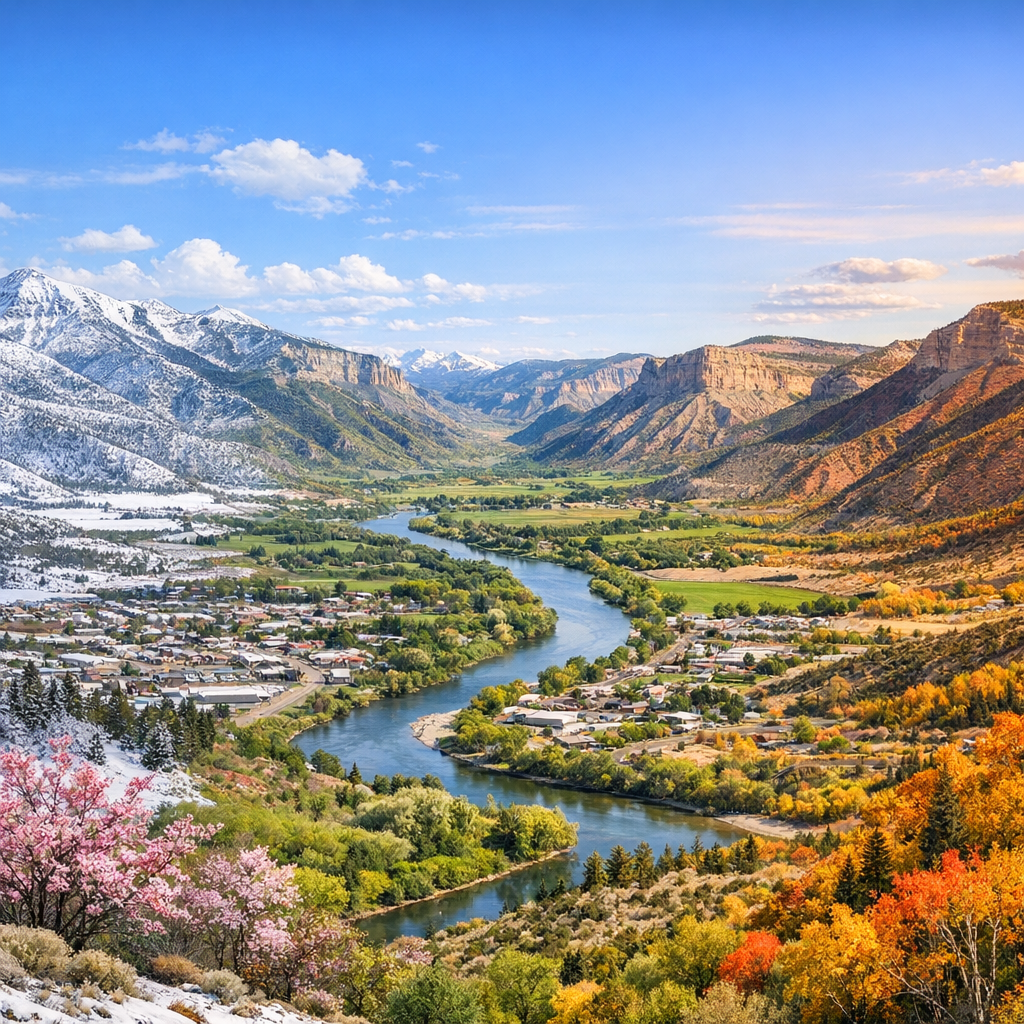
Parachute, Colorado, experiences a diverse climate characterized by hot, dry summers and cold, snowy winters. Understanding these patterns can help residents and visitors prepare for the varying conditions throughout the year.
Summer: Warm and Dry
Summers in Parachute are typically warm and dry, with average high temperatures ranging from 80°F to 91°F. The hottest month is July, averaging a high of 91°F and a low of 59°F. Precipitation during this season is relatively low, contributing to the arid conditions. It’s essential to stay hydrated and take precautions against heat-related illnesses during these months.
Winter: Cold and Snowy
Winters are cold, with average high temperatures below 46°F. January is the coldest month, with an average low of 17°F and a high of 37°F. Snowfall is common, with January receiving the most snowfall, averaging 12.28 inches over approximately 15.7 days. Residents should prepare for freezing temperatures and ensure their homes and vehicles are winter-ready.
Spring and Fall: Transitional Seasons
Spring and fall serve as transitional periods with moderate temperatures. Spring sees increasing temperatures and occasional rainfall, while fall brings cooler temperatures and a decrease in precipitation. These seasons offer comfortable conditions for outdoor activities.
Environmental Considerations
Parachute’s climate falls under the Köppen Climate Classification as a humid continental climate (Dfb), characterized by significant seasonal temperature variations. The area receives an average annual precipitation of approximately 17.91 inches, with rainfall fairly evenly distributed throughout the year. Residents should be aware of potential drought conditions during drier months and take appropriate water conservation measures.
By understanding Parachute’s climate patterns, residents and visitors can better prepare for the seasonal changes and enjoy all that this unique region has to offer.