

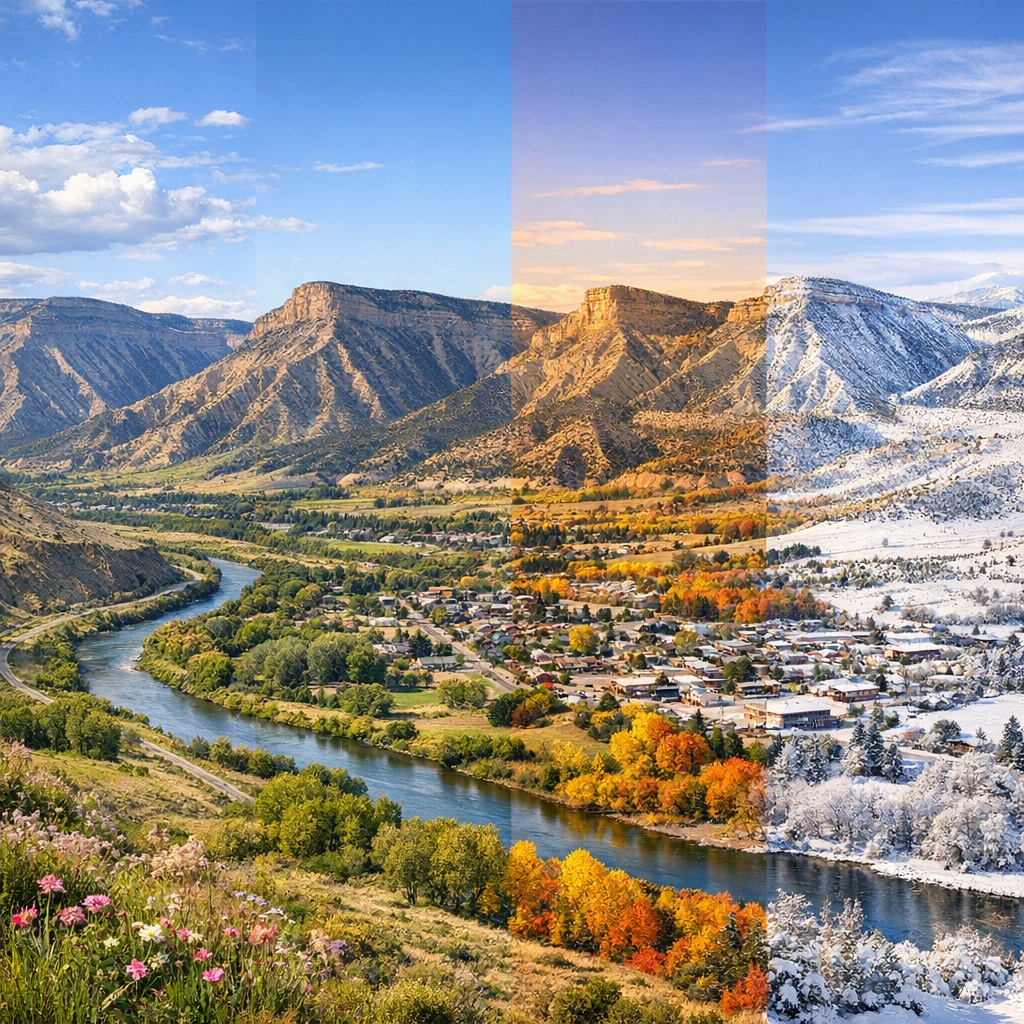
Parachute, Colorado, experiences a diverse climate characterized by distinct seasonal variations. Understanding these patterns is essential for residents and visitors alike.
Seasonal Temperature Variations
Summers in Parachute are typically hot and dry. The warmest month is July, with average high temperatures reaching around 91°F (33°C) and lows around 59°F (15°C). In contrast, winters are cold and snowy, with January being the coldest month, averaging highs of 37°F (3°C) and lows of 17°F (-8°C).
Precipitation and Snowfall
Annual precipitation averages approximately 13.9 inches (353 mm), with rainfall fairly evenly distributed throughout the year. Snowfall is common from October through May, contributing to the region’s winter landscape.
Growing Season and Frost Dates
The growing season in Parachute typically spans from late April to early October, providing approximately 150-180 frost-free days. The average last frost occurs between April 21 and April 30, while the first frost usually falls between October 1 and October 10.
Environmental Considerations
Parachute’s climate supports a variety of outdoor activities and agricultural pursuits. However, residents should be mindful of seasonal weather patterns, such as the potential for extreme heat in summer and significant snowfall in winter, which can impact daily life and local infrastructure.
By staying informed about these climatic trends, the Parachute community can better prepare for and adapt to the environmental conditions that define our region.